
Long before “Bluetooth” or “Apple CarPlay” were words, American automakers were already obsessed with the future. They didn’t have microchips, but they had Ingenuity. Here they are.
19. The “Autronic Eye” Watched the Road for You

Long before automatic high beams were a line of code in a computer, Cadillac mounted a physical “eye” on the dashboard.
It looked like a miniature ray gun, staring out the windshield. When it sensed oncoming headlights, it mechanically clicked your high beams off. It was pure sci-fi on a 1952 dashboard.
18. Highway Hi-Fi Played Vinyl at 60 MPH
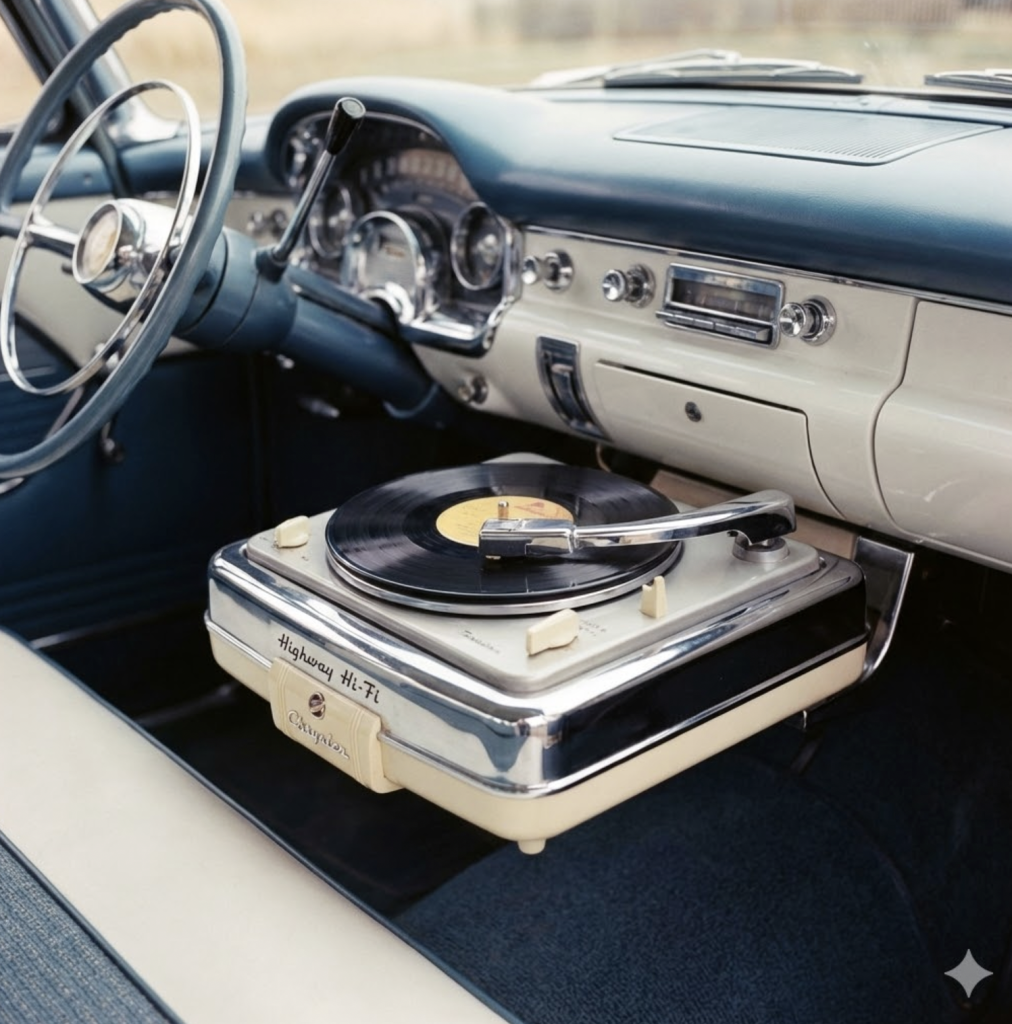
Streaming didn’t exist, and radio was unreliable. Chrysler’s solution? Put a record player under the dashboard.
Special “slow-speed” records were designed not to skip when you hit a pothole. It rarely worked perfectly, but the ambition was incredible.
17. Buttons Replaced the Gear Stick
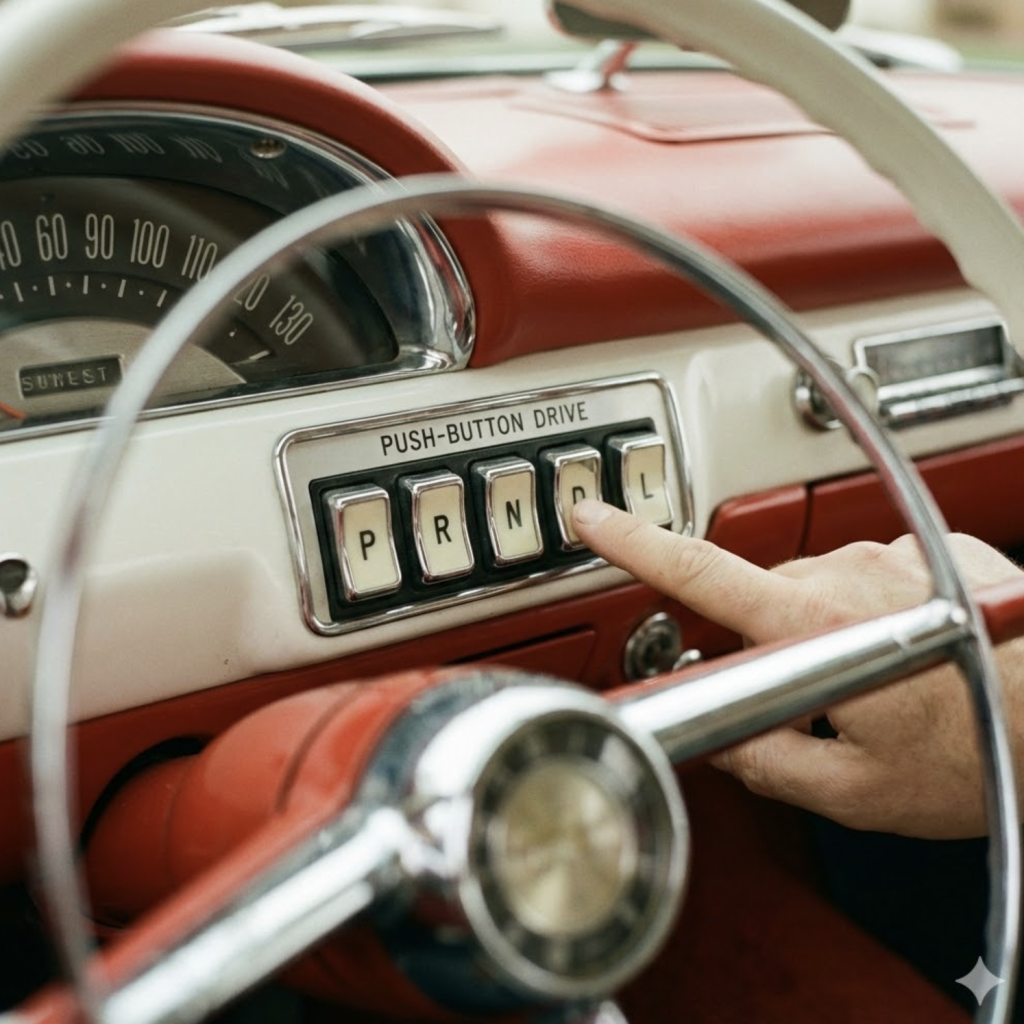
For a brief moment, the gear lever was declared obsolete. Chrysler and Edsel put transmission controls right in the center of the steering wheel or on the dash as mechanical buttons.
You didn’t “shift” into drive. You punched a button that said “D” like you were launching a rocket.
16. The “Liquid Tire Chain” Spray

In 1969, Chevrolet offered a feature that sounds fake today. Option V75 mounted aerosol cans over your rear tires.
If you got stuck in snow, you hit a button, and the car sprayed a chemical polymer onto your tires to melt the ice and add grip. It was chemical warfare against winter.
15. Ashtrays Were Vacuum Powered
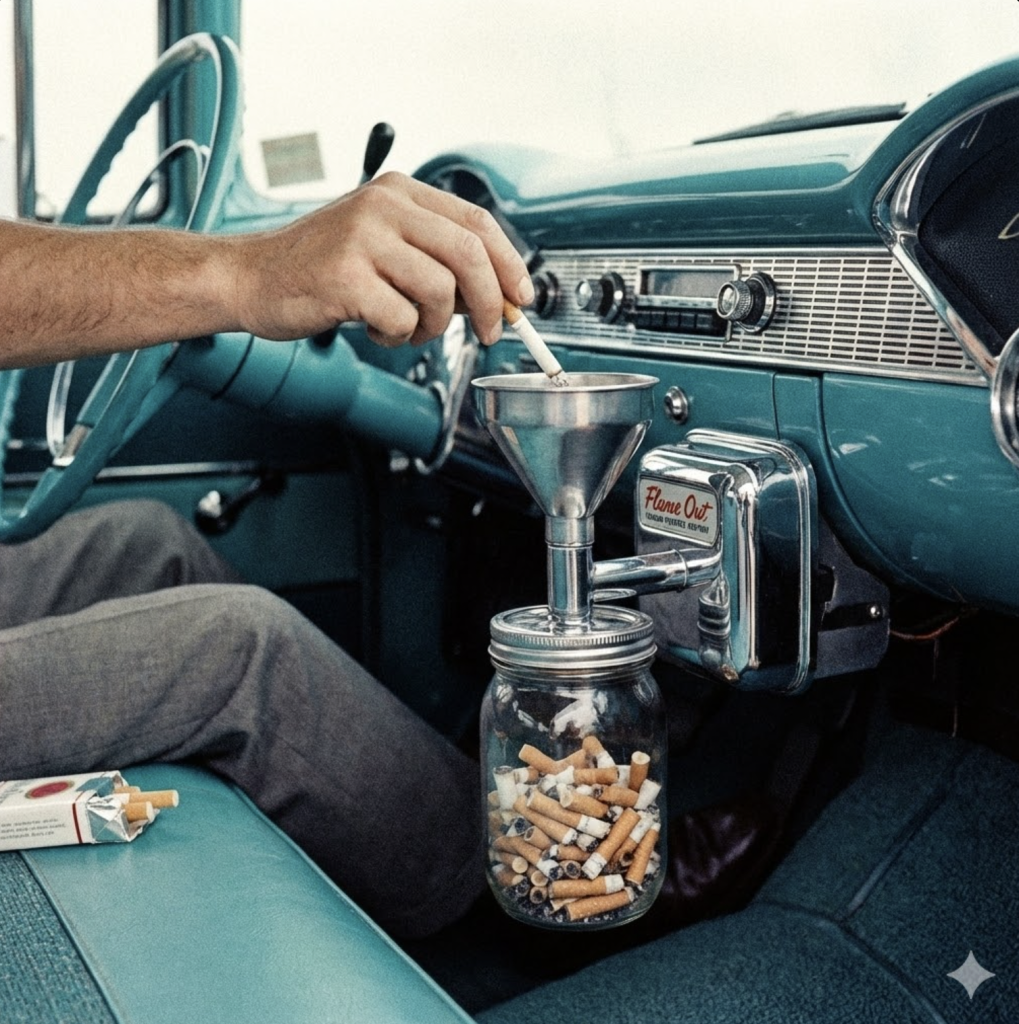
Chevrolet offered an accessory called the “Flame Out.” It wasn’t just a cup for ash.
It used the engine’s vacuum pressure to actively suck cigarette butts into a jar, extinguishing them instantly. High-tech disposal for a high-smoking era.
14. The Steering Wheel Was the Horn
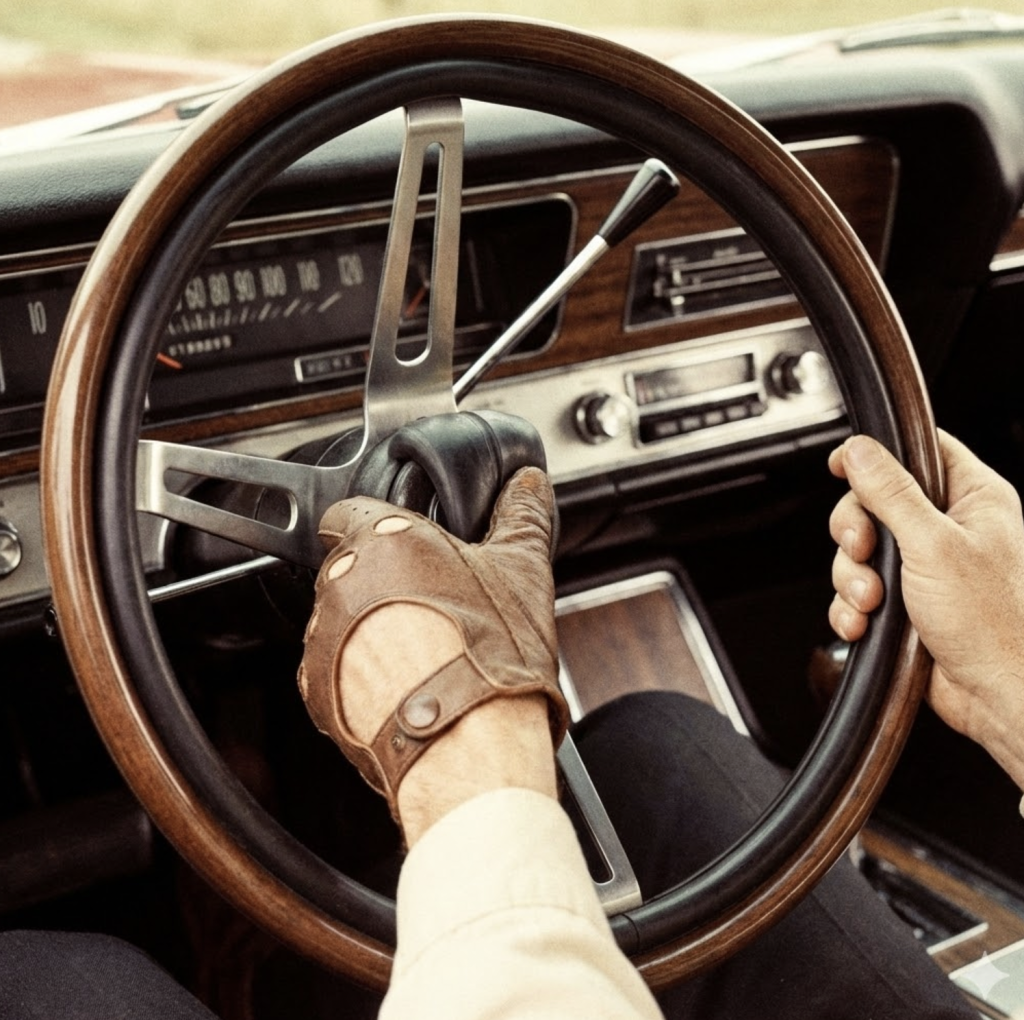
The “Rim Blow” steering wheel removed the horn button entirely. A rubber strip ran around the entire inner rim of the wheel.
You just squeezed the wheel anywhere, and the horn honked. It was elegant until the rubber hardened and the car started honking at random in the middle of the night.
13. Seats Swiveled to Greet You
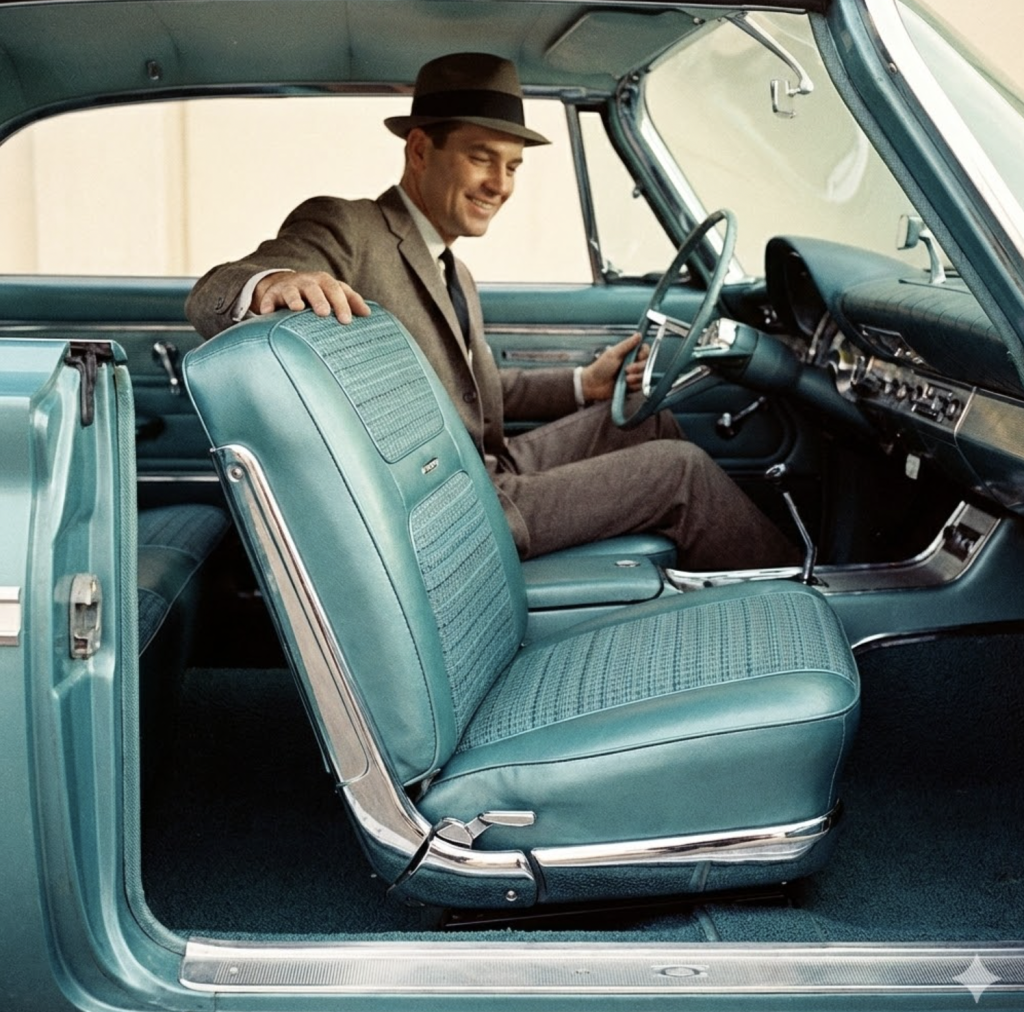
Getting into a low car was a chore, so Chrysler and GM made the seats spin.
Pull a lever, and the entire bucket seat rotated 40 degrees toward the door. It was the ultimate “welcome aboard” gesture.
12. The Seat Belt Interlock Nightmare
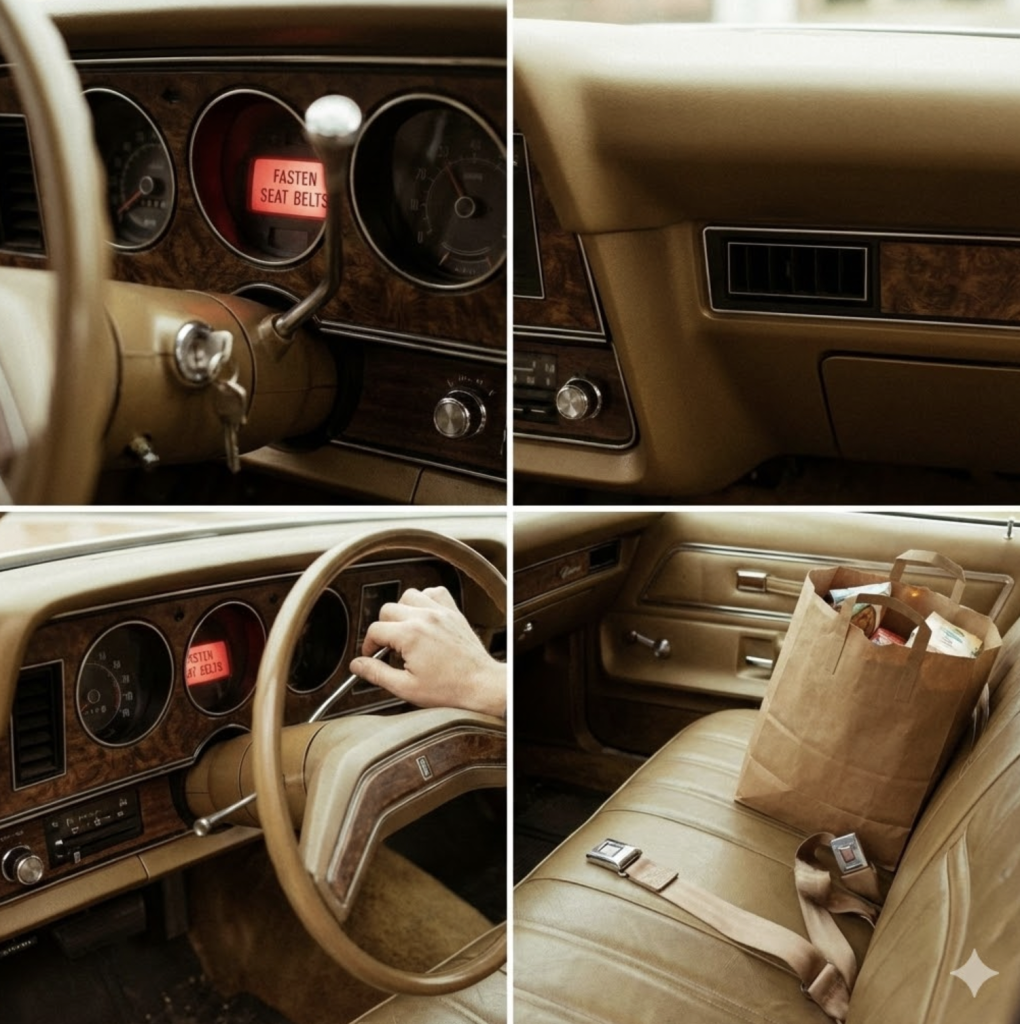
For one year only—1974—the government mandated that cars couldn’t start unless the seat belts were buckled.
It was a disaster. Grocery bags on the passenger seat would trigger the sensor, preventing the car from starting. Americans hated it so much it was banned by law the next year.
11. The “Glide-Away” Clamshell Tailgate
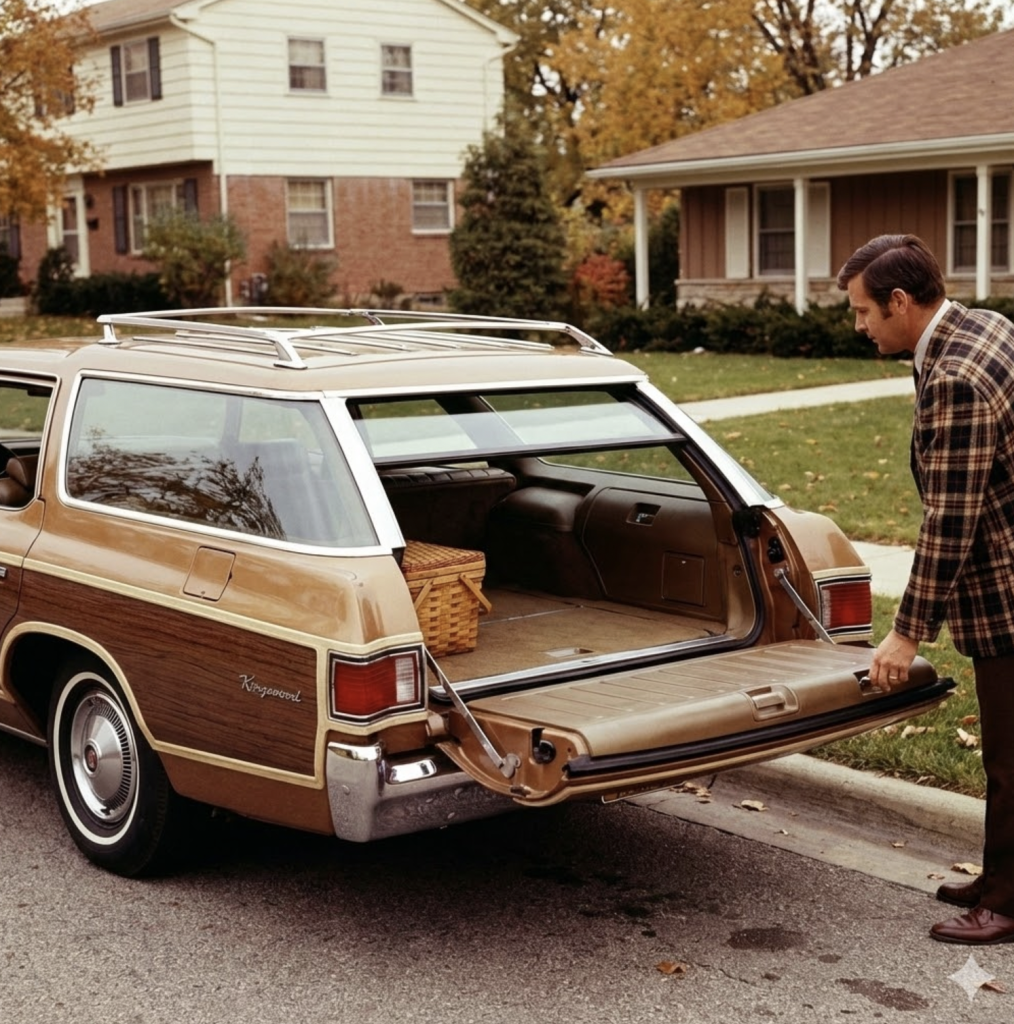
On big GM station wagons, the tailgate didn’t swing down. It vanished.
The glass slid up into the roof, and the heavy steel gate slid down under the floor. It was a disappearing magic trick that weighed hundreds of pounds.
10. 8-Track Players Ate Your Music
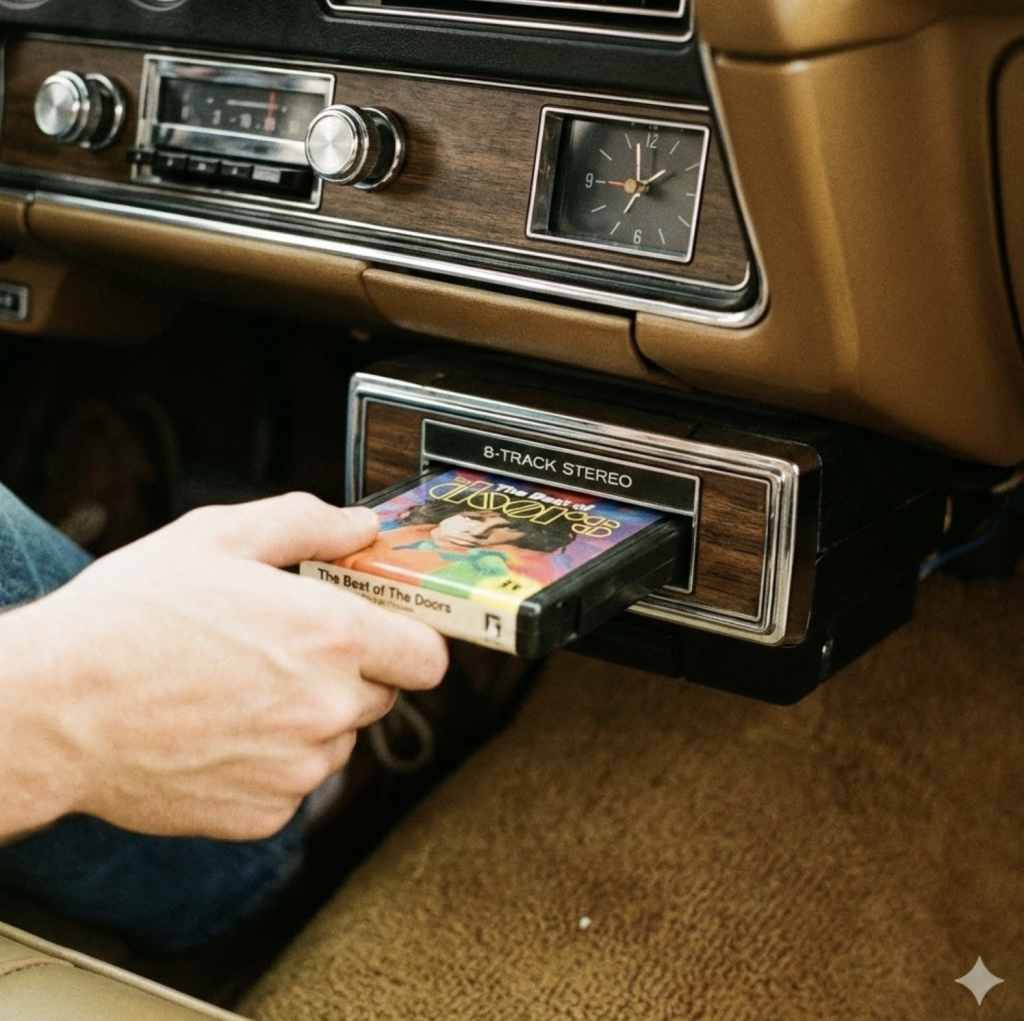
Before cassettes took over, the 8-track was the king of high-tech audio.
You shoved a bulky cartridge into the dash with a satisfying KA-CHUNK. Songs would fade out in the middle and switch tracks with a loud click, but it was your music, on demand.
9. Fiber-Optic Lamp Monitors

Corvettes and Cadillacs had tiny little lenses on the front fenders, facing the driver.
They were connected by fiber-optic cables to the headlights. If the light was on, you saw a glow. It was a purely analog way to know if you had a burnout.
8. The Speed Warning Buzzer
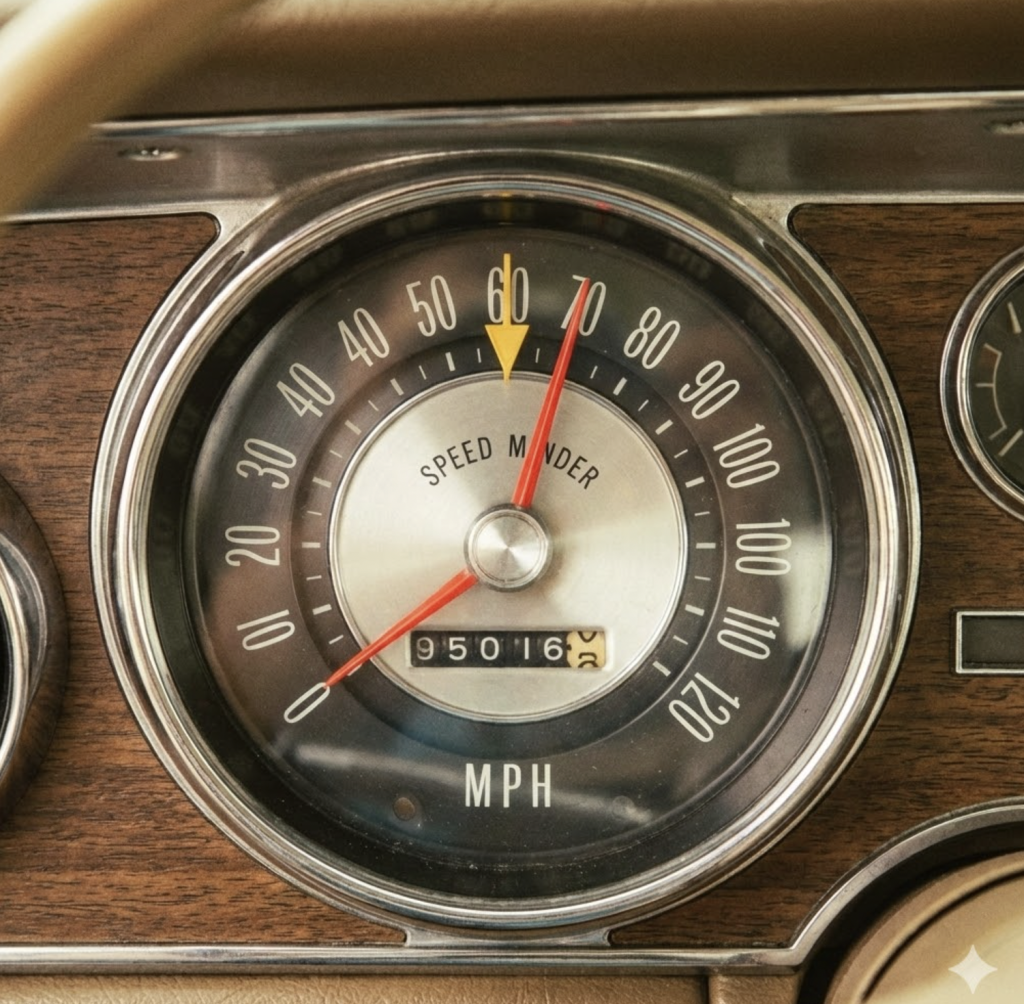
Cruise control was rare, but the “Speed Minder” was common on Buicks.
You set a needle on the speedometer to 55 or 60. If you crossed that line, a buzzer screamed at you until you let off the gas. It was a mechanical nagging system.
7. Max Trac Computers
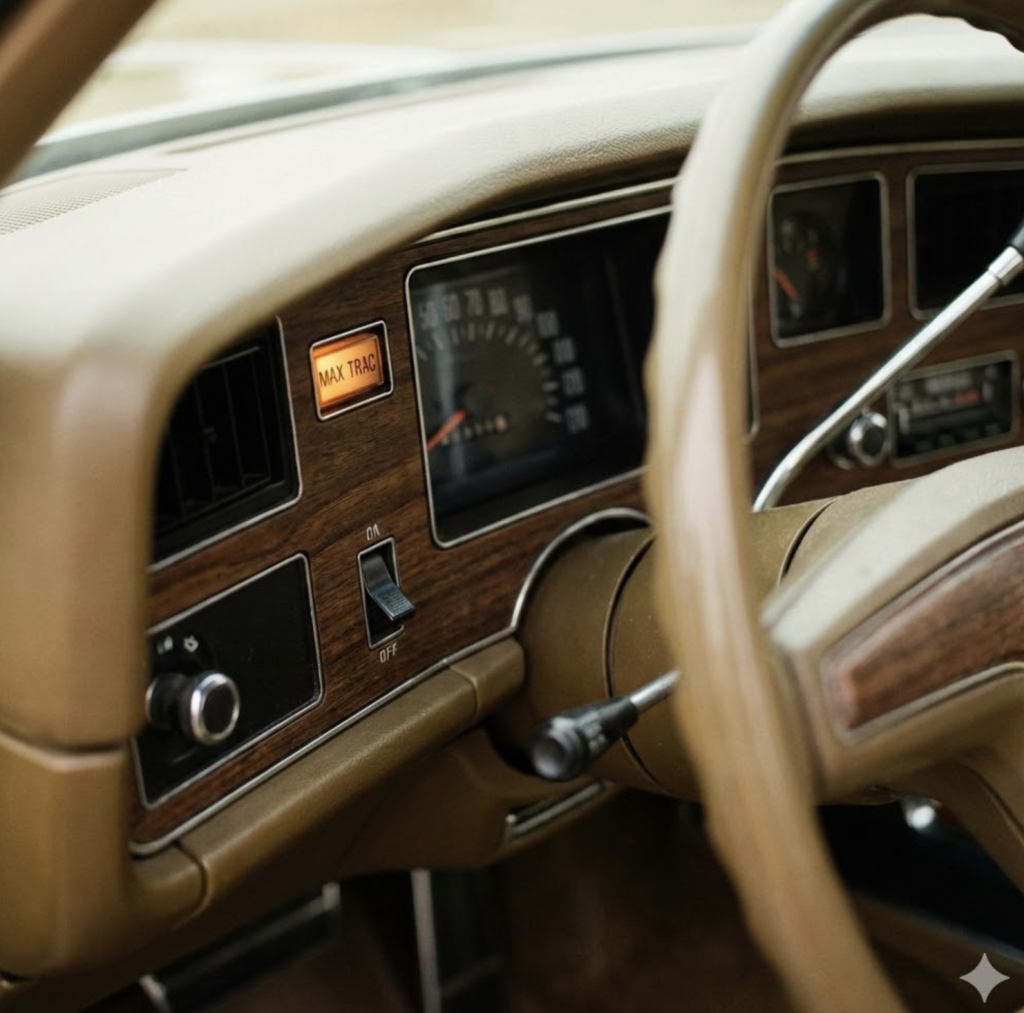
In 1971, Buick introduced a primitive computer to stop wheel spin.
It compared the speed of the front wheels to the rear wheels using sensors. If the rear spun too fast, it cut the engine power. It was the great-grandfather of modern traction control.
6. Air Cushion Restraint System
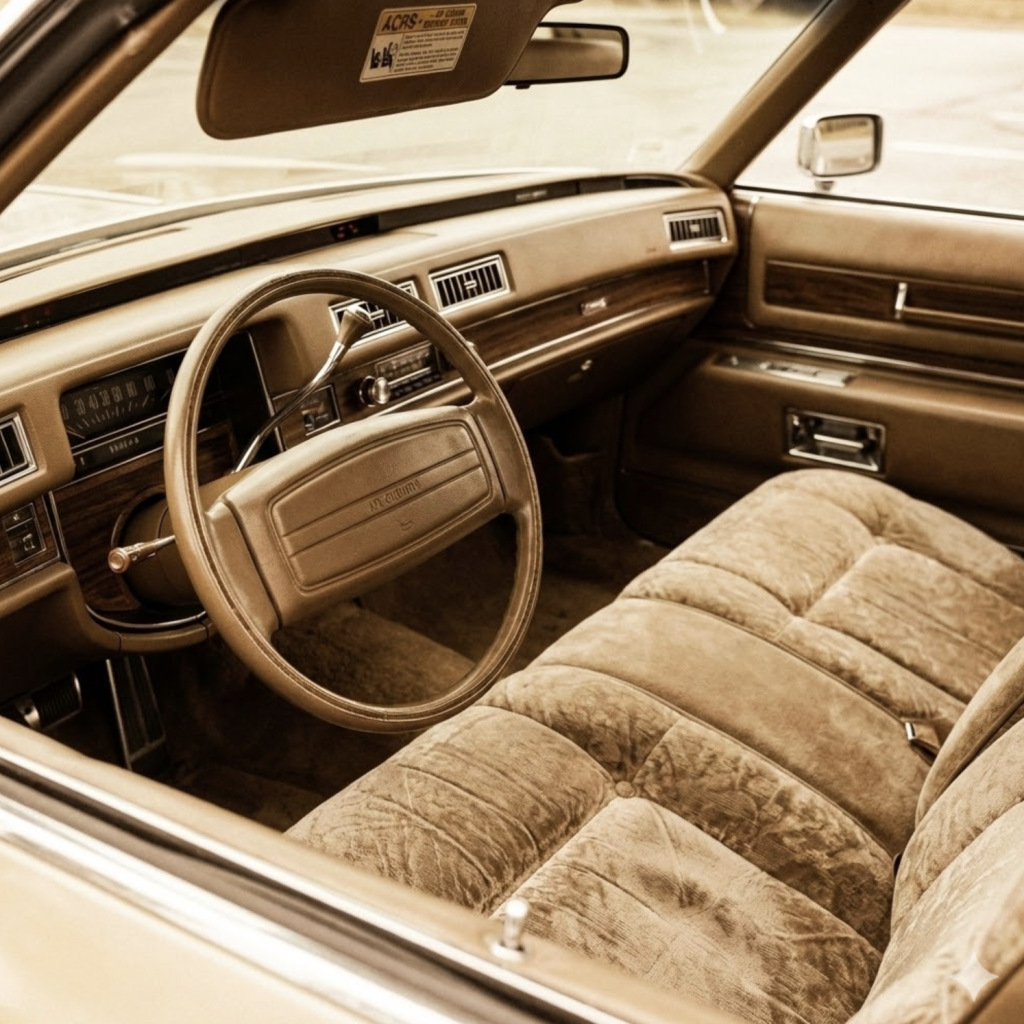
You think airbags are modern? GM offered them in 1974 on select Cadillacs and Oldsmobiles.
They were huge, expensive, and replaced the seat belts entirely. The public didn’t trust them, and the option was killed after just a couple of years.
5. Electro-Luminescent Dashboards
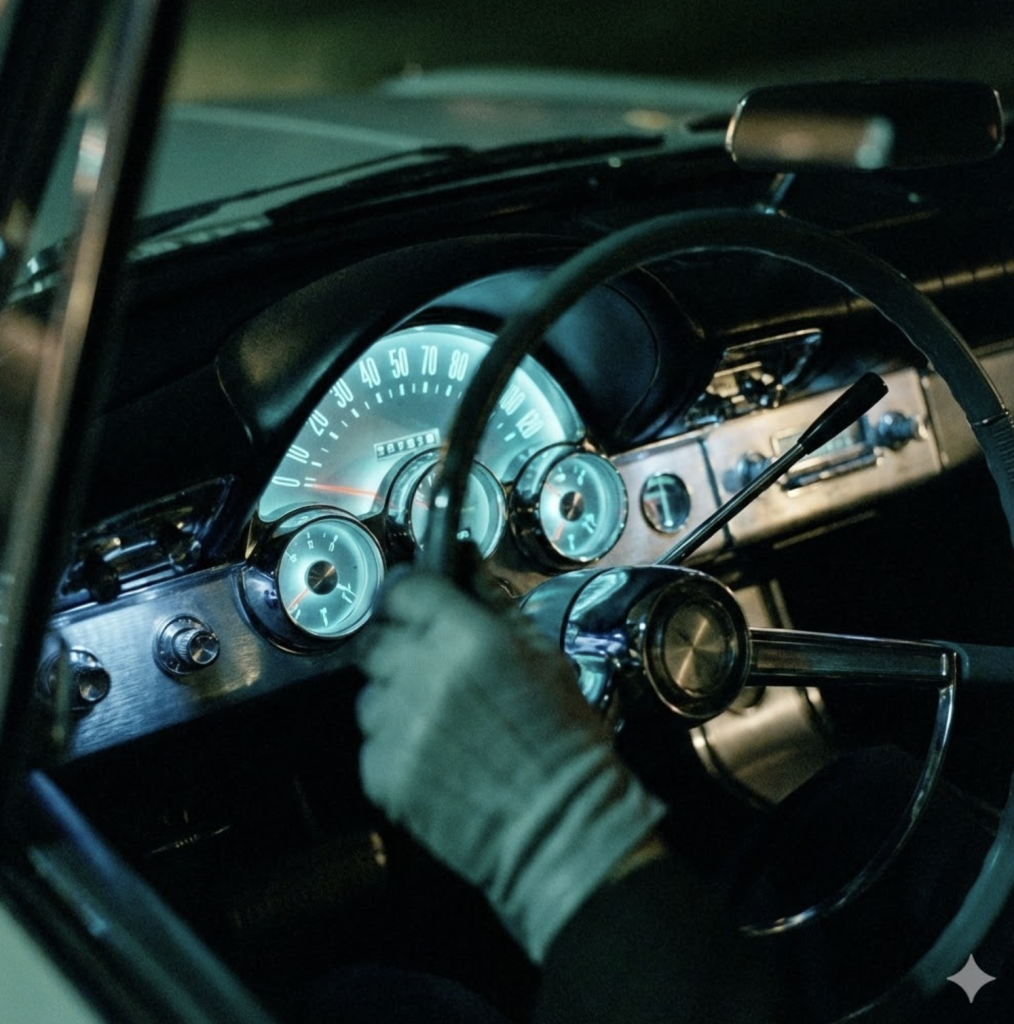
Chrysler didn’t use light bulbs for their gauges in the early 60s. They used high-voltage electricity to make the phosphorescent dial faces glow.
It was soft, even, and looked like the control panel of a UFO.
4. Hidden Fuel Fillers
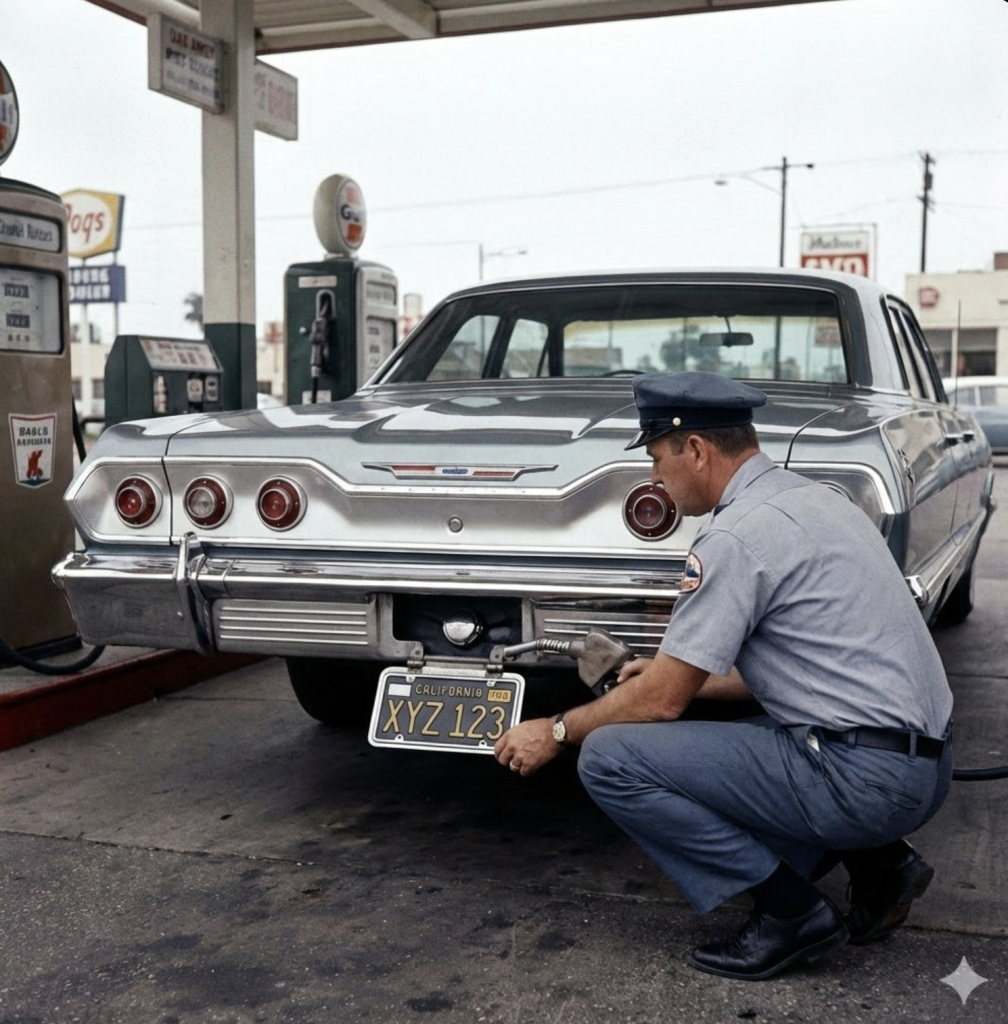
A gas cap was ugly, so designers hid it.
You had to know the secret handshake. Maybe it was behind the license plate. Maybe it was hidden in the taillight assembly. Watching a gas station attendant search for it was half the fun.
3. Cornering Lights
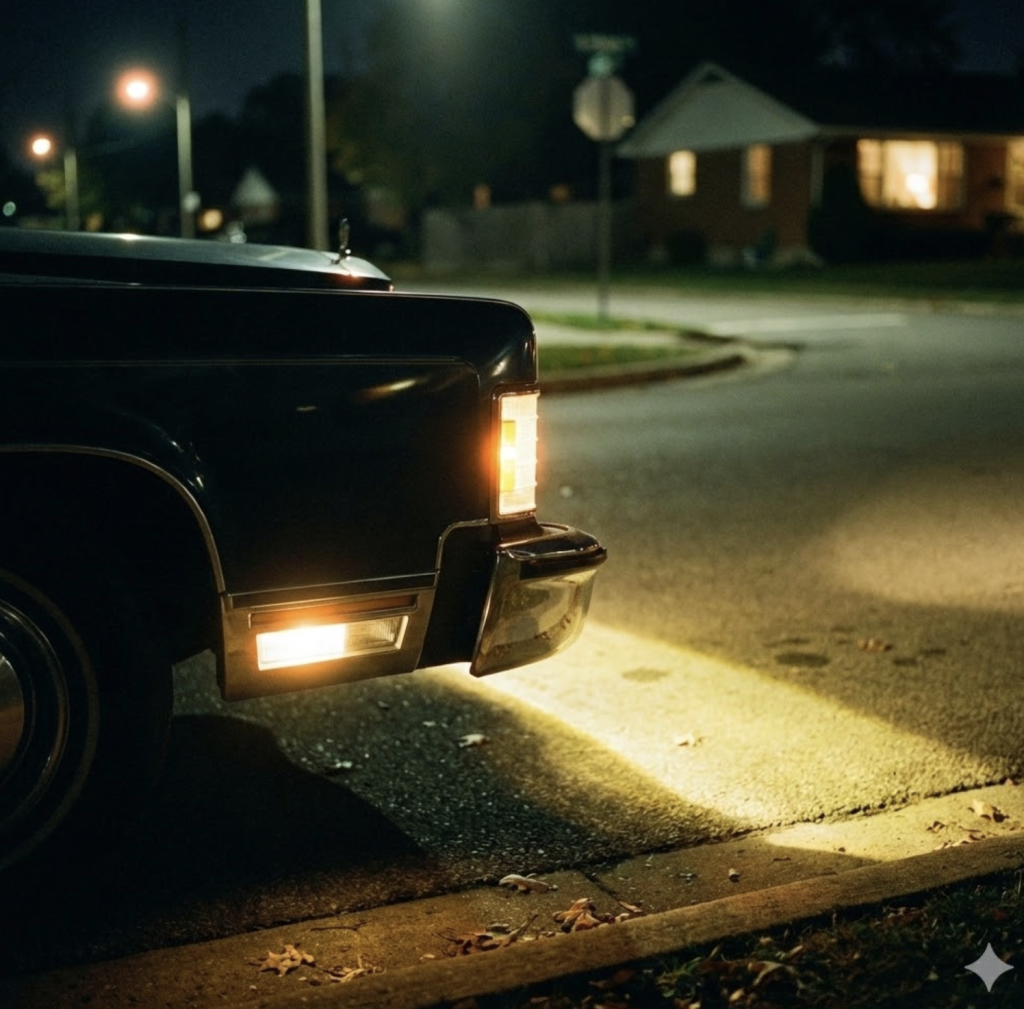
When you hit the turn signal, a special clear light on the side of the fender turned on.
It illuminated the curb and the corner you were turning into. It was simple, effective safety that has largely disappeared.
2. Automatic Climate Control
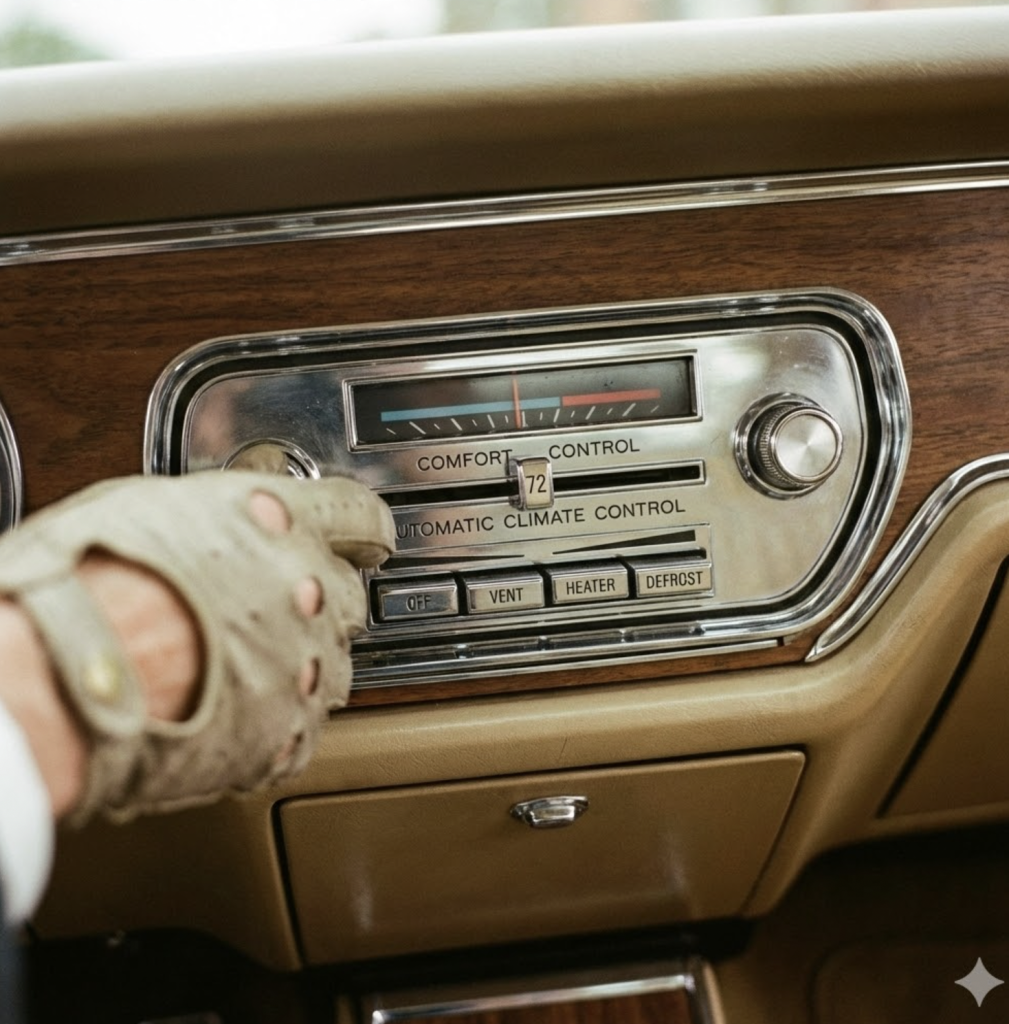
In 1964, Cadillac introduced “Comfort Control.” You set a thermostat to 72 degrees, and the car did the rest.
It was a complex web of vacuum tubes and sensors that mostly worked, until it didn’t. But for the 60s, it was magic.
1. The Floor-Mounted Dimmer Switch
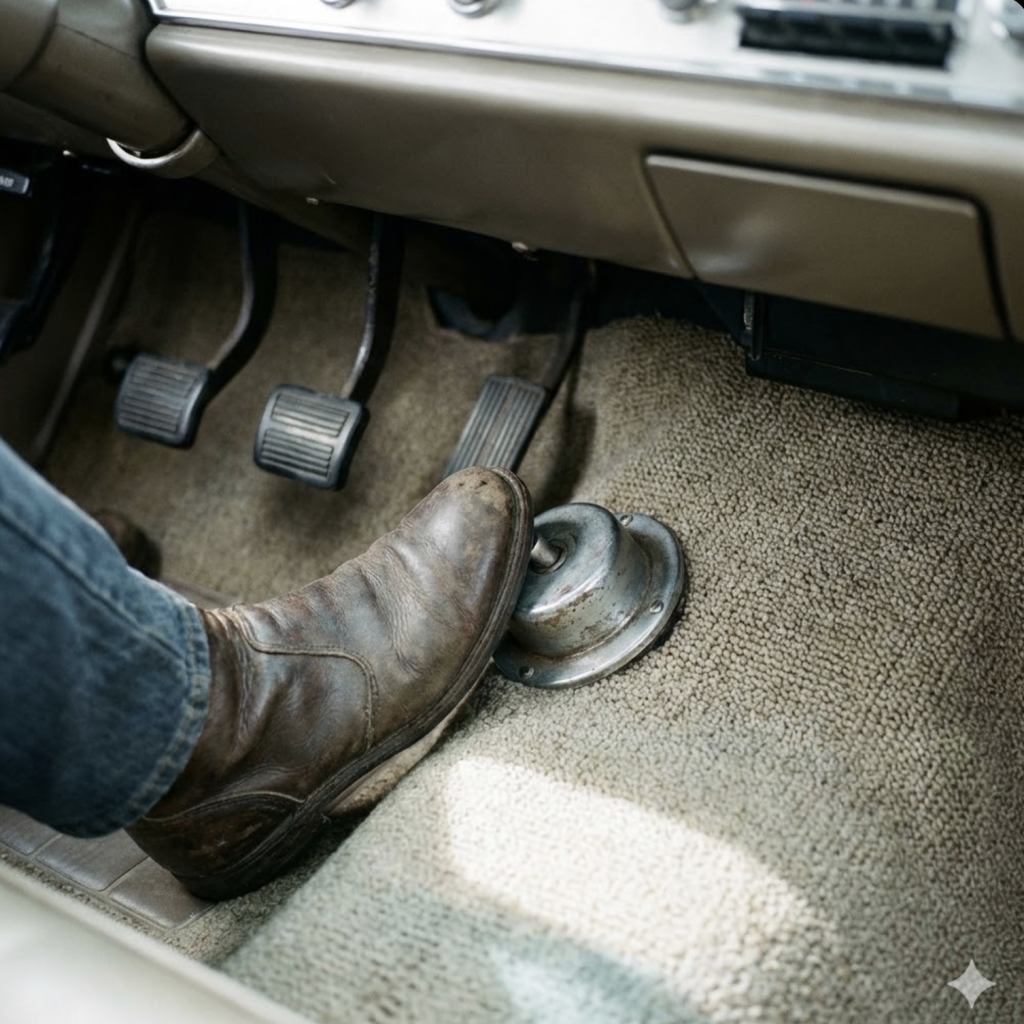
This is the one we miss the most. Your high beams weren’t controlled by your fingers. They were controlled by your left foot.
A sturdy metal button on the floorboard let you stomp your lights on and off. It was tactile, satisfying, and kept your hands on the wheel.
The Future Was Heavier Back Then
Long before software updates and touchscreens, “High Tech” meant engineers building complex mechanical solutions to simple problems. We didn’t have GPS or backup cameras, but we had swivel seats and record players.
Today’s cars are smarter, safer, and cleaner. But they lack the sheer mechanical audacity of a 1959 dashboard.